


With a confident dog, hitting the quick is a bad day.
With a rescue, it can undo months of work. So you don't get to guess.
Without pinning him down, gambling on one bad clip, or sedating him just to get his nails done.

Clippers commit in one cut. A slip finds the quick.
Scratchboards only reach his front nails, not the dewclaws or back paws.
A grinder takes off thin slivers, so you have a moment to stop, and it can reach the nails those tools miss.
You don't have to start at his nail.
Session one can just be the grinder on across the room while he eats.
No pinning, no holding him down.
He goes one paw a day, at his pace, and the free Rescue Nail Trim Playbook walks you through every step.
You graze, lift, and check after each pass. Never one committed cut.
You check after every pass, not after one bad cut.
Yes. One paw a day, one nail a day, whatever he'll allow. Short, voluntary sessions are the whole point.
Settling can take months, sometimes years.
Meanwhile, long nails can push his toes sideways, strain his joints, and let the quick grow longer, making future trims harder.
You can start now with tiny introductions, even if session one is only letting him hear the grinder from across the room.
You've got 60 days to try it with him. That's plenty of time to get past the nervous first sessions.
If you and him still aren't getting on with it, send it back and we'll refund you. No questions, no judgment.
Just email contact@bauven.com.
You get Free Delivery on every order.
Processing time: 1–3 working days
Delivery time: 5–6 working days
Total: 6-9 working days


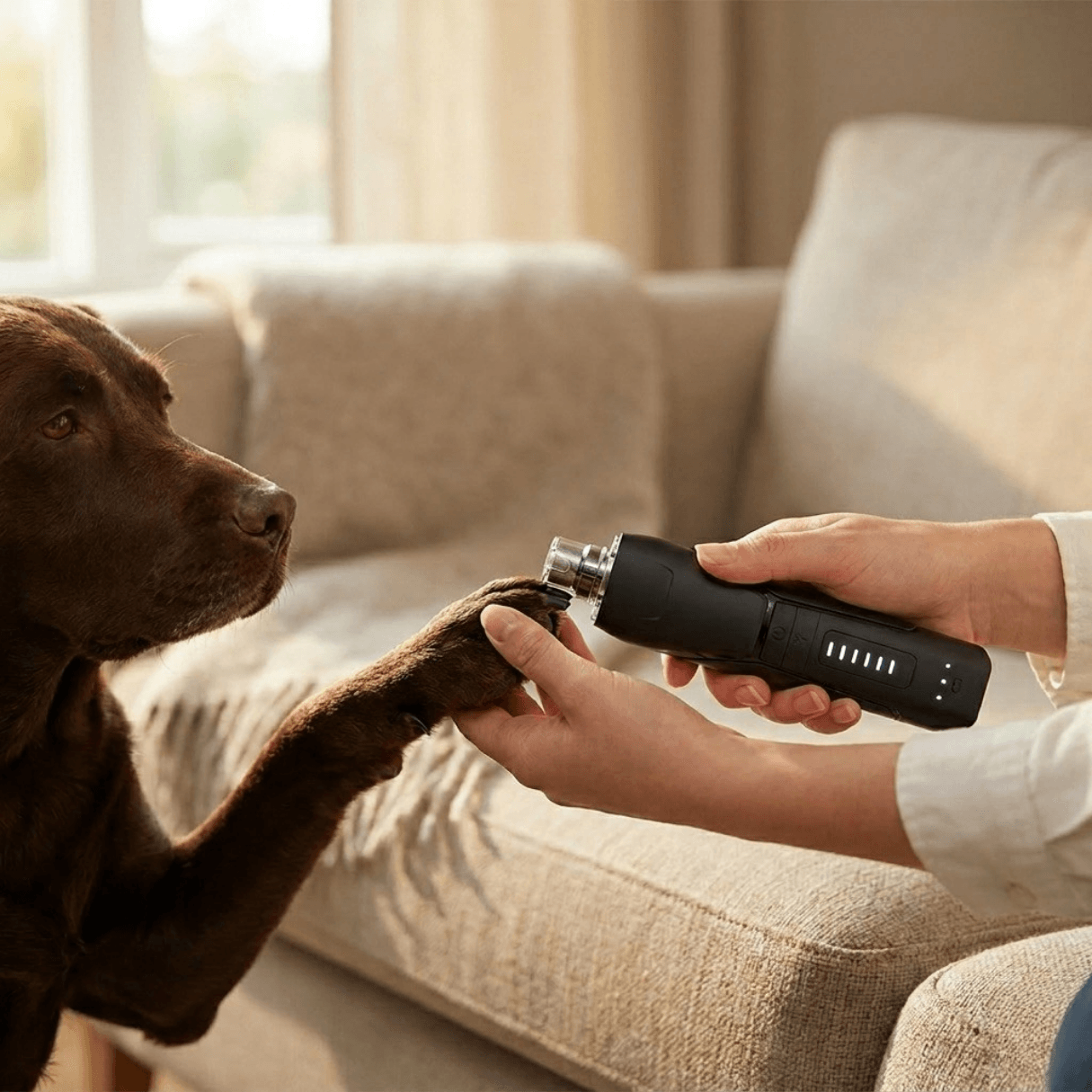

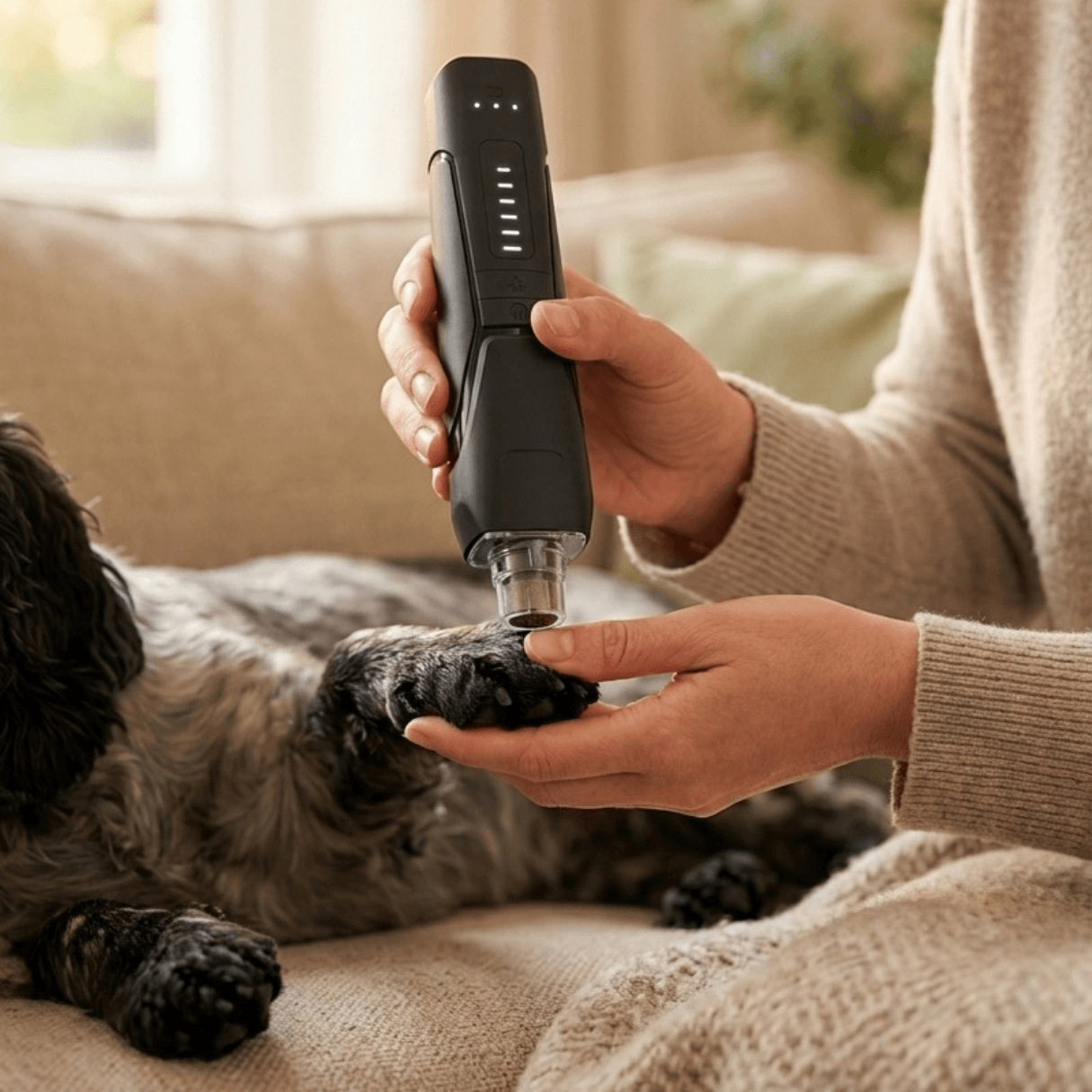


He’s the best dog until you touch his paws. Then he trembles, pulls away, or snaps.
You've tried the treats and the tiny sessions. Still, one fear makes you wait:
One bad clip could undo months of trust.
Groomers have handed him back. Vets have reached for sedation. When even paid pros can't manage it, the problem was never you.
Here’s why:
The blade pinches the nail before it cuts. He feels the squeeze and pulls the paw back before you've even started. And if you do get one, one slip and it's done. No undoing it.
You leave the room. It goes on until they're done, not until he's had enough. And you never quite know how he was handled.
He's held until they finish, by hands he doesn't know. The clinic becomes a place he dreads. And £15 to £30 a fortnight, forever, was never a plan.
It reaches everything. It reaches it by switching him off. Sometimes it's necessary and there's no shame in it, but most owners would rather not medicate for a routine trim.
He starts it, he stops it. That part's right. But it only files his front claws. The dewclaws and back paws never get touched.
He sets the pace. That part's right too. But it takes months, and his nails keep growing the whole time.
They lower his general anxiety. They don't touch the panic of the paw being held.

Clippers take the nail in one cut. A grinder takes it down in tiny passes.
So when your rescue flinches or pulls away, you can stop without one bad clip undoing months of trust.
WHY NOT JUST ANY GRINDER
A quiet motor helps. But noise is only what he hears.
A grinder can still send two uncomfortable sensations through the nail itself.
Your dog cannot tell you what feels wrong, so he pulls his paw away.

A motor that wobbles as it spins sends a tiny knock down the nail with every turn.
You barely feel it in your hand. He feels it in the paw he's always been wary of.

A grinding head that drags instead of gliding rubs at the nail. Rubbing builds heat.
He can't tell you it feels hot. So he does the one thing that's always worked. He pulls the paw back.
With a confident dog, hitting the quick is a bad day.
With a rescue, it can undo months of work. So you don't get to guess.

As you get close, a black dot appears in the centre of the nail. The LED helps you spot it.
That's the last layer before the quick. See the dot, stop.

The LED lets you see the pink quick through the nail.
You stop a millimetre short of it.

You reach for his paw with less dread on both sides.
The shaking eases, session after session.
One trim no longer risks undoing months of work.
No floor-wrestling. No sedation.
That's not a someday thing. That can be a few trims away.

Begin with the grinder switched off and at a comfortable distance. Over several calm sessions, gradually introduce movement, sound, paw handling and nail contact.

Once he is ready for nail contact, use gentle one-second passes. Lift away, check and continue only while he stays comfortable.

Light nails: stop before the pink. Dark nails: stop at the dark dot.

After each nail, a treat or a calm fuss. If he pulls away, stop and try again later. One good nail beats one bad session he remembers.

Cap off, wipe the dust, so next time starts smooth.

Every rescue dog starts in a different place. Your included eBook shows you how to introduce the grinder gradually, read his signals, and know when to repeat, move forward or stop.

free with every order
The nail was never the only hard part. It's not knowing what he's been through, or what sets him off.
So every order comes with The Calm Nail Grinding Plan For Rescue Dogs eBook:
So you open the box already knowing what session one looks like.
Cheap grinders chase the noise and stop there. Bauven is built for what a nervous dog actually meets: shake, heat, stalling, and knowing when to stop.

|
£20 Grinders | |
|---|---|---|
| Steady motor, less shake down the nail | ||
| Glides, so it stays cooler | ||
| Doesn't stall on thick nails | ||
| Gentle for rescues | ||
| 6 speeds to go slow | ||
| Guide for nervous owners |

the cost of waiting
Settling can take months or years while his nails keep growing.
Long nails can strain his toes and joints. The quick can grow longer too, making future trims harder.
You can start gently now. With regular, gradual trims, the quick can slowly recede.
Summer Sale - Up to 40% Off Your Order


A rescue doesn't take to anything in a week.
So you get 60 days, enough time to get past the nervous first sessions and see where you two land.
Still not getting on with it? Send it back for a full refund.
No questions. No judgment.
Those weren't different failures. Each one forced the contact, dragged it out, made one mistake permanent, or couldn't reach every nail.
Bauven is built for short, stoppable contact that still finishes the job, and it covers the two things other grinders leave on the paw: shake and heat.
If that's not enough for you two, send it back within 60 days.
His history is real, and Bauven doesn't pretend to erase it. It just stops adding to it.
Turn the shake and the heat down and there's far less feeding the old fear, so the trust you've built has room to hold.
The guide handles the rest, at whatever speed he needs. You've got 60 days to find out.
The guide keeps the first sessions small and calm. He sniffs it. He hears it. You reward and stop.
If he pulls away, you end there. Nothing forced, and far less for him to remember badly.
One good nail beats a full session every time.
The grinder removes thin layers, giving you time to stop.
There's no blade snapping shut in one irreversible cut.
You may have told yourself that after the clippers too. Often it was the tool doing the hurting, not you. The guide walks you through each session.
Short, voluntary sessions are safer for both of you than a wrestling match.
You end the moment he says enough, before it escalates.
The guide covers paw-shy and reactive dogs. It can't promise to prevent aggression, but it's designed not to provoke it.
That says nothing about you. In one case it took four techs and a large man for a single clip.
Reactive dogs often do better at home, without the clinic's stress and strange hands.
Settling can take months or years, and his nails grow the whole time.
You don't need him confident to start. Tiny introductions can begin now.
It's built around doing it alone. No pinning. No restraining. None of what made the vet visits so awful.
It holds torque far better than cheap grinders, which tend to bog down and drag the session out.
Cap off and you can reach the nails scratchboards miss, front and back.
Heat only builds when a grinder drags and sits in one spot.
Bauven stops that two ways: the Cool-Glide head glides instead of rubbing, and the short-pass method keeps it moving.
Short passes, lift, check. It barely warms.
Yes. As you grind closer to the quick, a dark dot appears in the centre of the nail.
The LED helps you spot it early. See the dot, stop.
The Cool-Glide head glides rather than drags, so heat stays low, even on thick black nails.
As you near the quick, a dark dot appears in the centre. The LED helps you spot it. See the dot, stop.
Yes. Three port sizes and six speeds cover everything from thin little claws to thick, heavy-duty nails.
About 5-8 minutes for a small dog, 10-15 for a medium, 15-25 for a Lab or bigger.
But with a rescue you don't do it in one go. One paw a day, or one nail a day, works fine.
Little and often is the sweet spot. It keeps the quick receding and sessions short. What "often" looks like is up to his pace.
60 days to try it, at whatever speed he needs.
Not getting on with it? Send it back for a refund. No questions, no judgment.